Friday, October 18, 2013

Surrealistic Themes

The Metamorphasis by Franz Kafka has been shrouded in a haze of surrealism ever since the idea was introduced the first day we started reading the novel. Because events in the book are absurd and bizarre, there is a nightmarish quality about the story; I half-expect Gregor to be having a rather detailed and prolonged dream, wake up, kiss the ground, then get back to the usual grind. One reason I think this is because Gregor seems pretty calm when he realizes that he's transformed, which gives the entire story a dream-like quality.

 First of all, the family doesn't call police and there's no media attention; they're poor, but I'd expect more of a reaction out of them.

Second, Gregor goes into great detail and length when explaining to manager his faults; giving such a long explanation in a heated moment seems unrealistic, but since it's necessary for plot explanation, it fits as well.

Third, the family knows him as Gregor, then reject this idea. Gregor also repeatedly tries to get on good terms with his family, even though he is going to fail each time; these repeated attempts seem to serve to illustrate a point (Gregor misses his human life) rather than be a realistic portrayal of a difficult circumstance (I would think he'd realize what he's causing and give up eventually).

The surrealistic tones of the short novel made me less sympathetic to Gregor's plight. I wouldn't be surprised if a dragon broke through the roof and carried Gregor away to Middle-earth.  But the emotions that the family goes through make the novel truly gripping; even though I don't really care what happens to Gregor eventually, his family's situation has me fully invested in the book.


Wednesday, October 16, 2013

Cohntrary to Jake's Opinion


"I want to go to South America."
He had a hard, Jewish, stubborn streak. (18)


I saw Cohn coming over across the square.
"Here he comes."
"Well, let him not get superior and Jewish." (102)


"That Cohn gets me," Bill said. "He's got this Jewish superiority so strong that he thinks the only emotion he'll
get out of the fight will be being bored." (166)


This bias against Cohn's Jewishness doesn't seem to merit all of the hate he gets throughout the book. So why does everyone hate Cohn?

I want to point out that Cohn isn't such a bad person. Robert Cohn is just portrayed as an antagonist by the "gang" of Jake, Brett, Mike, and Bill, because he is so different from them.
1). Cohn has values that he defends, which is why he stands up for Brett's honor. These values also make him made when Brett goes off with Romero, because she isn't "absolutely fine and straight" (46). 
2) Cohn has passions and ambitions that the rest of the gang lack. For example, he wants to go to South America right after reading "The Purple Land" by W. H. Hudson. No one else in the expat gang has a passion to go anywhere or do anything.

I actually know Cohn's personality, satisfactions, and fears from Jake's description of him in the first chapter. This makes him a multidimensional character. I don't feel like I know Brett, Jake, Mike, or Bill in the same way. These characters seem to perform only a couple of actions throughout the novel and don't seem to exhibit any growth. Even though they marginalize Cohn towards the end of the novel, Cohn plays a bigger role than the gang thinks he plays. He serves as a moral benchmark that the rest of the characters do not meet.


Friday, October 11, 2013

Midnight in Paris

Before reading The Sun Also Rises, I had watched "Midnight in Paris" by Woody Allen at least twice. The movie portrays Gil (Owen Wilson), modern day writer, on a vacation in Paris. He's a little spacey, and he somehow finds a way to travel back in time to Paris in the 1920s. He meets all of the famous writers of that time, Scott Fitzgerald and Gertrude Stein, and they humble him. But Gil also meets Hemingway, who is much different from the different writers. As I read The Sun Also Rises, I always had the following two scenes in my mind; the plain yet descriptive prose of Hemingway's reminded me of these two clips:
http://www.youtube.com/watch?v=kw9spMYA-XU 
In this clip, Gil is talking to Hemingway about writing, and Hemingway's masculinity and aggressiveness comes on very strong in this scene. I can really see Hemingway knocking out critics with his attitude in this scene.

http://www.youtube.com/watch?v=i1P1m5gNQuo  This long monologue by Hemingway really fits his prose style. He uses simple words that paint clear images and uses the word "and" a lot. At 1:36 in this clip, Hemingway begins to describe the passion in truly brave people, which reminds me of Jake's (and Hemingway's) deep respect for bullfighters. I think the filmmakers did a really great job with Hemingway in this movie.

Other than a portrayal of Hemingway, "Midnight in Paris" also  paints a complete picture of 1920s Paris for me. Gil, while following these famous writers, goes from cafe to cafe, just like Jake does. Also like Jake, Gil is part of an in crowd, the crowd of writers (who are like the expats in the book).


"Midnight in Paris" really shaped my view of Jake's Paris throughout The Sun Also Rises. As Jake ambled along the river, I could only picture Gil, with his hands in his pockets, staring off into the starry sky.

Friday, September 20, 2013

Multiple Points of View

Woolf made Clarissa very realistic for me because I got to experience multiple parts of her personality. With Howie in The Mezzanine, I was getting one person's point of view of Howie as a person, so I felt like I didn't get the whole picture. Clarissa was described by a multitude of characters in Mrs. Dalloway in addition to herself,  giving me a more balanced view of Clarissa. However, the biggest aspect that drew me into Clarissa's character is her flaws.

Clarissa's flaws are mentioned throughout the book by herself and other characters. Not only her old age, but her physical oldness as well.
"“Peter! Peter!” cried Clarissa, following him out on to the landing. “My party to-night! Remember my party to-night!” she cried, having to raise her voice against the roar of the open air, and, overwhelmed by the traffic and the sound of all the clocks striking, her voice crying “Remember my party to-night!” sounded frail and thin and very far away as Peter Walsh shut the door." (54)

Clarissa's physical descriptions by many different people, especially in the very beginning of the book as she was observed by Scrope Purvis, gives me a clear image of Clarissa's physical image.
"A charming woman, Scrope Purvis thought her (knowing her as one does know people who live next door to one in Westminster); a touch of the bird about her, of the jay, blue-green, light, vivacious, though she was over fifty, and grown very white since her illness. There she perched, never seeing him, waiting to cross, very upright."(6)
Howie gives us fleeting descriptions of his appearance. I know he has a beard and is middle aged, but other than that I'm not sure how he looks like (I assume he looks like Nicholson Baker).

Another one of Clarissa's flaws is that she lives in the past, regretting her momentous decisions that she made at Bourton, or imagining what her life could have been if she had married Peter Walsh instead of Richard. Clarissa is also often described as being shallow and superficial, especially by Peter, who is critical of her tendency to throw many useless parties. Clarissa seems to have real life problems, while Howie seems to be in his own world, and not in any real trouble. Most of the time, readers don't care for a character like that. 

Finally, Clarissa is caught in a social web that is laced with relationships and complicated people. With Peter, Richard, and Sally, Clarissa has a romantic history. With Kilman, an uneasy one. But Howie's interactions with his lunch-bound co-workers and shop check-out workers seem insubstantial in comparison. He briefly interacts with other people, and therefore he seems unrealistically shut-out of the world. Because Howie isn't described by other people in his world, I don't know how he actually looks like. And I'm not sure I can trust Howie's opinion of himself (if he even has one). In Mrs. Dalloway, I'm bombarded with images and perceptions of Clarissa that are realistically complex, making her a very convincing character.


Thursday, September 19, 2013

Significance of Flowers in Mrs. Dalloway

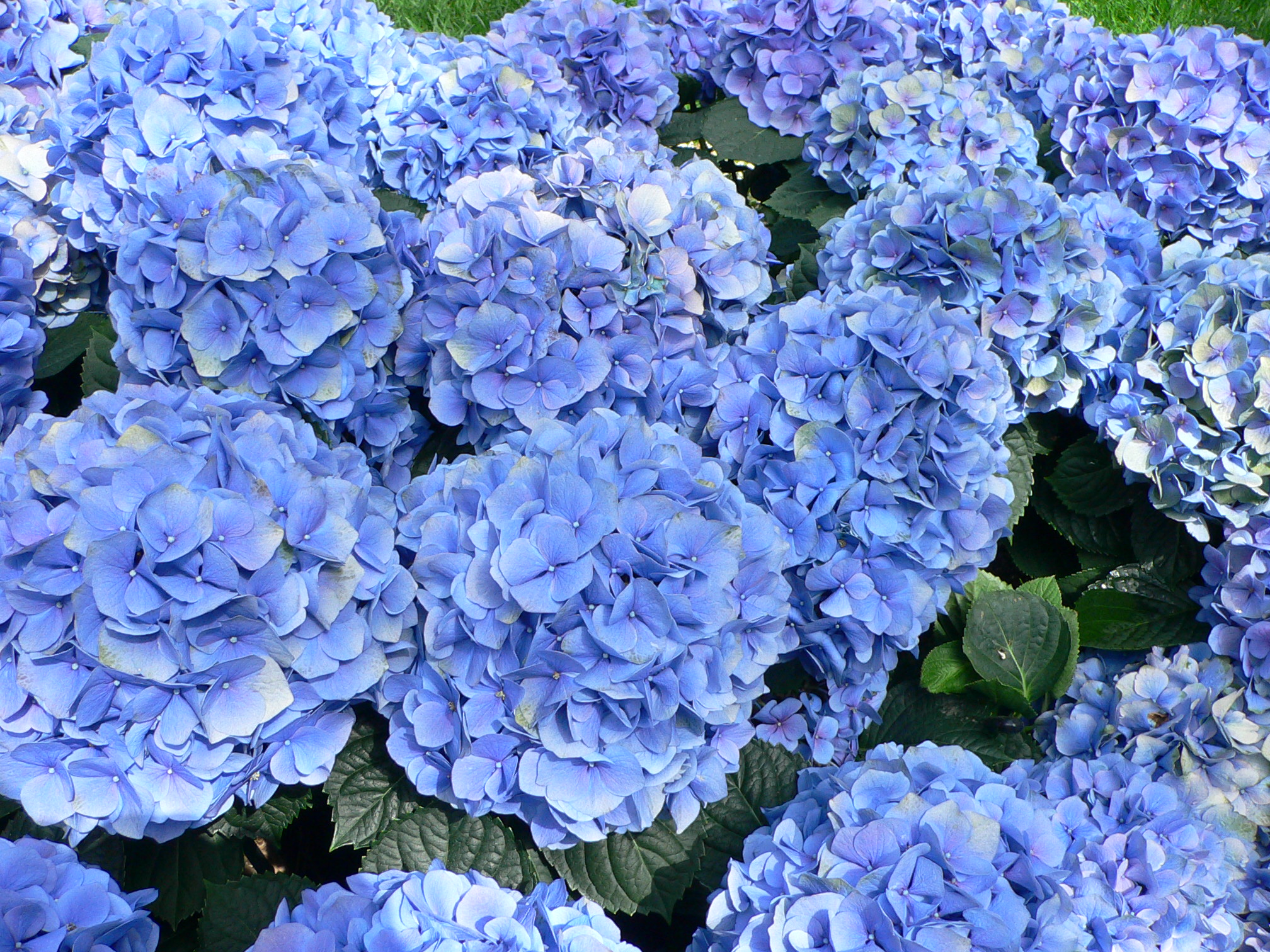
The beginning of The Hours highlighted the emphasis on flowers in Mrs. Dalloway. It really struck me in the beginning of the movie, as I watched three different stories being tied together by people arranging flowers in vases. I know for certain that my family isn't that big on flowers, especially because they are expensive. But also, they don't really mean anything to my family. We all know that roses stand for love, because from the movies, rose petals cue romantic music. But what do other flowers mean? Like the hyacinths that are mentioned in Mrs. Dalloway a number of times? And the hydrangeas that reminded Clarissa of Sally Seton?

                                                                                    Hydrangea---->


Just like roses say "I love you", hyacinths mean "I am sorry", and hydrangeas express gratitude. Perhaps these flower meanings cannot be translated literally into Mrs. Dalloway, but nature still plays a big part in the book. Especially when Sally Seton is involved. Here are two examples of Sally's relationship with flowers:

1). Sally Seton offers Clarissa a flower and kisses her at Bourton:

"Then came the most exquisite moment of her whole life passing a stone urn with flowers in it. Sally stopped; picked a flower; kissed her on the lips. The whole world might have turned upside down! (40)"<--but I have the wrong version of the book.

2). Sally's personality is demonstrated in a short anecdote about her flower arranging skills:

" Sally's power was amazing, her gift, her personality. There was her way with flowers, for instance. At Bourton they always had stiff little vases all the way down the table. Sally went out, picked hollyhocks, dahlias--all sorts of flowers that had never been seen together--cut their heads off, and made them swim on top of water in bowls. The effect was extraordinary..(38)"

Richard and Mrs. Dalloway also exhibit proclivities toward buying flowers. Other than the obvious first line, "Mrs. Dalloway said she would buy the flowers herself.", Richard buys flowers for Clarissa later in the book, to show his love for her after he hears Clarissa's name mentioned during lunch with Hugh. The lunch inspires such love in Richard that he goes to buy "any number of flowers, roses, orchids, to celebrate what was, reckoning things as you will, an event; this feeling about her when they spoke of Peter Walsh at luncheon.. (127). " Richard stated that he trusted his taste in flowers more than his taste in gold. What a love of flowers!

And finally, the comparing of actual people to flowers in Mrs. Dalloway. 
"As a child, she had had a perfect sense of humour; but now at seventeen, why, Clarissa could not in the least understand, she had become very serious; like a hyacinth, sheathed in glossy green, with buds just tinted, a hyacinth which has had no sun. (135)" 

                                                                                                  Hyacinth----->

Flowers must have played a much bigger role in Victorian England than it does in my world. Reading Mrs. Dalloway, I got a sense of how important flowers are to the characters, but perhaps I'll never really understand their love of floral arrangements.


Thursday, September 5, 2013

Character Realism

In class, we assumed that Howie was a reflection of Nicholson Baker himself (for example, Mr. Mitchell referenced Baker's beard on the back cover when talking about Howie's beard in the book). There are plenty of other similarities between Baker and Howie. This brought me to ask the question: How often do authors insert themselves into their own novels as main characters?

One author that I can think of that writes about the same type of character, himself, book after book, is Haruki Murakami. Two of his books in particular:  The Wind-Up Bird Chronicle and Kafka on the Shore. I thought that the main characters from each book could have been easily swapped. Toru Okada from The Wind-Up Bird Chronicle and Kafka Tamura from Kafka on the Shore are both strong-willed men who set out on adventures for quirky but personal reasons. They are also both very introspective, and I know Murakami is as well. The main connection between them is that they both enjoy lemons and/or lemon drops and delve into the details of cooking for themselves.  These two recurring habits in Murakami's novels lead me to believe that Murakami portrays himself as other characters.

There are obvious examples of authors writing about themselves in their own novels. Kurt Vonnegut in Slaughterhouse-Five writes about his experiences during World War II through the story of Billy Pilgrim, the book's main character. This gives the book an autobiographic feel, which was different from The Mezzanine (cause who writes an autobiography like that?).
 
Authors also can gift their characters with their personal beliefs. In class discussion on Mrs. Dalloway, we said that Virginia Woolf values solitary experiences (while talking about Septimus's pre-war life) which matches with Clarissa's enjoyment of spending time alone. I think this is a great way to give a character realistic traits; what is more realistic than your own real feelings?